Showing posts with label Suspense. Show all posts

Friday, August 29, 2014

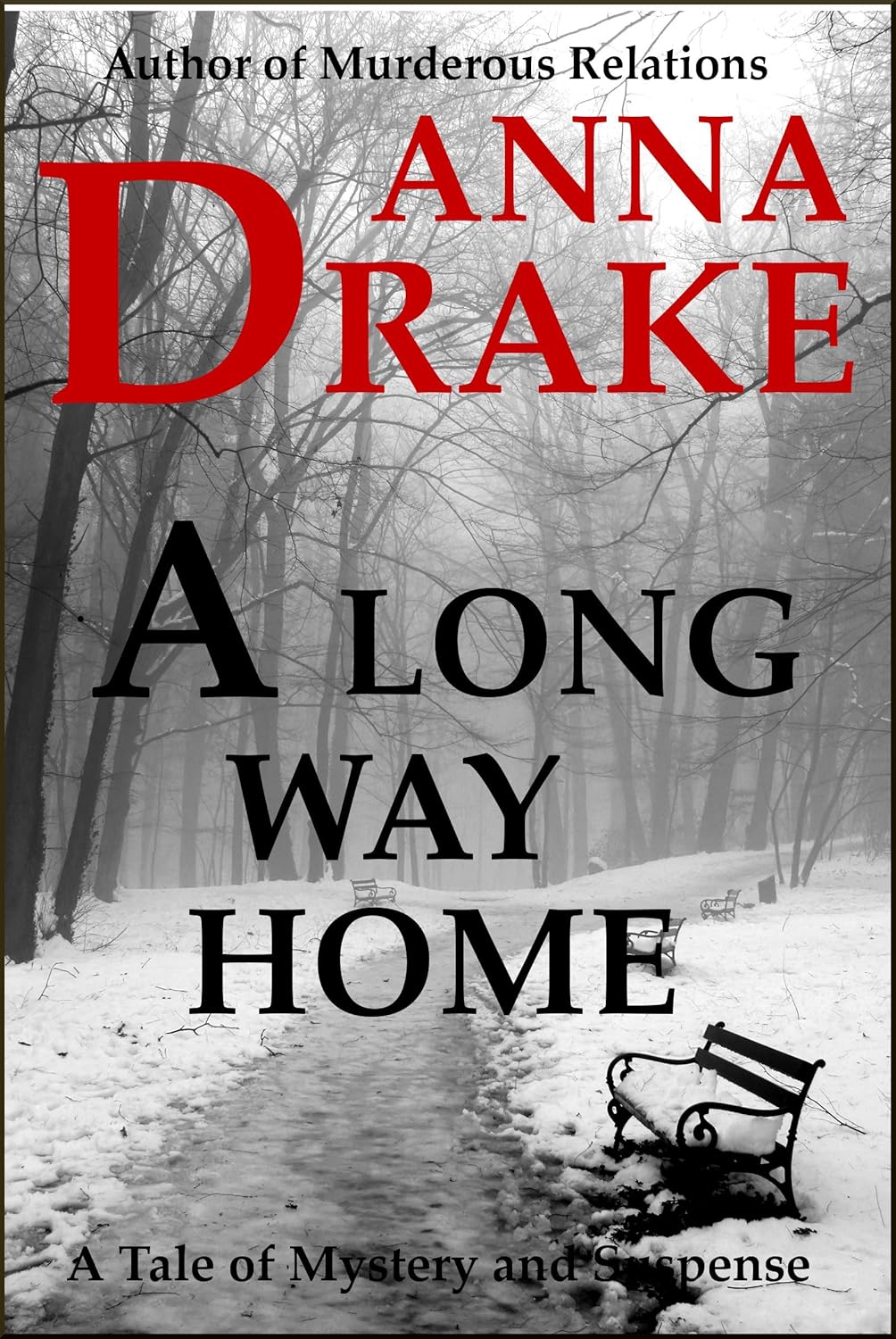
"A Long Way Home" by Anna Drake (Novelette)


Genre:  Suspense

Type of Short Story:  Novelette

Summary:  Newly minted widow, Angela Clark, learns that while her husband may be dead, her enemy is terrifyingly alive. Angela's challenge is deciding whether she wants to live or die.

Excerpt:

I stared at the gentleman seated opposite me. Dark hair with wisps of gray at the temples. Aquiline nose. Narrow face. Expensive, tasteful suit, done up in a conservative, gray fabric. He wanted to know why I’d come.

“My husband, Jeffery,” I said, “died not quite a month ago. He was stabbed to death. He’d been walking home from our store after closing.”

Dr. Ivan Gregory placed his hands on his desk and nodded. “A violent death is always upsetting. But you say you’re not sleeping. You’re not eating. You need to understand those are normal reactions after what you’ve experienced. It will take you time to recover from this kind of shock. Grief has its stages.”

“But Jeff was murdered. Someone deliberately robbed him of life. Can you explain to me how I’m to get over something like that?”

Gregory offered me a reassuring smile. “I grant you murder complicates things. What you’re feeling at this moment is no doubt nearly overwhelming. But if you’re willing to put in the effort and time required, you can recover. You mention murder. So let’s begin with how you feel about your husband’s killer."

“Jeff was only thirty-four. We were deeply in love. We were thinking of starting a family. How do you think I feel?”

“Anger is normal under these circumstances. I take it the killer hasn’t been caught, then?”

“No.” My voice sounded strained even to my own ears. “Whoever did this is still running around out there. Free to do whatever they please.”

“And that bothers you?”

I leaned forward toward this man seated behind his wide, dark, teak desk. “Of course, it does. I know this doesn’t sound nice. But I want this killer hunted down. I want to be sitting there in court when the jury’s verdict is announced. I want to see the murderer flinch as he or she learns the price they’ll pay for taking my husband’s life.”

“I see.” Gregory scratched a few notes on his pad of paper before returning his gaze to my face. “There are websites online that can help you with this. They’re places where people left behind after a murder can share their stories with each other. Have you heard of such sites?”

“Actually, yes.” I repositioned myself in my chair. “I even have a list of some. My mother tracked them down. But I took that piece of paper she gave me and shoved it into a drawer. And I’ve never so much as looked at it since.”

“You don’t think visiting a few of the websites could be helpful to you?”

“No,” I said. Then I added in what was almost a whisper, “I’m not sure even sure I want to know.”

“You enjoy holding on to your anger?”

“Maybe,” I admitted. “At least this way, I feel something.”
Buy this story on Amazon.

Friday, November 8, 2013

"The Cabbie" by Kirstyn (Short Story)

Genre:  Supernatural, Suspense

Type of Short Story:  Short Story

Excerpt:

"You ask too many questions. I'm not what you need to worry about right now. Listen, in about 5 minutes, a man is going to come out of that Mexican restaurant across the street and I want you to follow him. Take these cothes and put them on, and follow him on foot. And whatever you do, do not take your hand off your gun. One mistake, and it's your life."

Read the entire story here.

Friday, February 1, 2013

"Shada" by Craig Hansen (Novella)


Genre:  Young Adult, Paranormal, Suspense

Type of Short Story:  Novella

Summary:  If you could speak to the dead, anyone at all, who would it be?

When Jeni asked this question, Shada Emery figured it was a joke. So both she and Willow joined in the fun, naming their favorite dead celebrities.

And then there was Ember Cole.

Ember wants one more talk with her Grandpa Normie, whose death a year ago began a year of tragedy. So when Jeni suggests a camping trip into the dense woods of northwestern Wisconsin to hold a seance, Shada and Willow put off their misgivings and agree for the sake of their friend.

Ember hopes to find the answers she seeks among the dead. But sometimes the dead have their own agenda.

Excerpt:

“If you could talk to a dead person, anyone at all, who would it be?”

Jeni Taylor let her question hang in the air, her expression hard to read. She wore the strangest smile I’d ever seen and even though she was busy treading the slow-moving waters of the Elk Ridge River, her eyes sparkling in the bright summer sun, it seemed to me nothing about her question was light or casual.

The four of us were all together that day: Jeni, Ember, Willow, and me. We enjoyed swimming in the Elk Ridge because none of us could afford a membership at the Y, and the community pool was always overflowing with younger kids obsessed with splashing. Besides, the river had a bridge running over it that provided an excellent diving spot about thirty feet above the surface of the water. The Elk Ridge ran deep in the middle, shallow to about five feet out. None of us had ever touched the river bottom in the middle, and not for lack of trying.

Two of us stood at the edges of the shallow area, one on either side, while the other two would take turns diving into the deep. As we did this, we would swim to one shore or the other to take over spotting duties while the spotters took their turn to dive.

“Shada, watch me!” Willow, the youngest of us, shouted. I looked up as she performed a cannonball from the bridge into the deep water. Her blonde hair trailed behind her as she dived, and when she came up, it had turned dark. She swam over to Jeni, wiping the river water from her eyes and blowing water out of her nose.

“That’s easy,” Willow told Jeni. “I’d want to talk to William Kirby.” As Willow turned around, I could tell she enjoyed the idea.

“Who’s that?” Jeni asked.

“I think he’s the guy who created the Fantastic Four with Stan Lee,” Ember shouted from the bridge.

“That’s Jack Kirby, Embie,” I said.

My brother Robbie was big into comic books, especially classic ones from thirty years before he was even born. His closet was filled with more white boxes of the things than it was with clothes. Such a nerd. I liked superhero movies with hunky male actors. All four of us did. But the comic books they’d come from? That was my brother’s obsession, not mine, but even I knew who Jack Kirby was. Robbie had left for college two months early and I already missed him.

Willow giggled at Ember. “I said William Kirby, not Jack.”

“So who’s that?” Jeni asked as she began climbing up the steep river bank, a familiar path through the weeds that lined the way, tramped down by frequent use, mostly from the four of us. She reached the top and walked out on the bridge toward Ember.

“Only the father of entomology,” Willow said, rolling her eyes in astonishment, as though all of us should have learned this long ago. “He lived in Britain in the eighteenth and nineteenth centuries, and coleopterology was one of his specialties. Just like me.”

“Does anyone know what Willow’s talking about?” Ember said.

“It’s all Greek to me,” Jeni said, climbing over the railing to stand next to Ember.

“Actually, it’s Latin.” Willow could get annoying after a while with her tendency to correct others. We were probably her only close friends. “Entomology is the study of insects in general. Coleopterology is the study of beetles in particular.”

“God, I should have known,” Jeni moaned. “Willow and her beetles.”

“I think it’s nice Willow knows things,” Ember said. She seemed to be stalling, keeping the conversation going instead of the diving rotation moving.

“Yeah,” I yelled up at Ember, “you think it’s especially cool when you’re in science class together and she sits next to you. Your test scores improve dramatically.”

Jeni snorted in amusement and Ember saluted me with one finger extended. Willow, the only one to take the comment seriously, said, “She’s a grade ahead of me! We’ve never been in the same science class.”

“It’s called a joke, Willow,” I told her.

She pondered for a moment, and then, speaking in a deep monotone voice like a Star Trek Vulcan, she replied, “I find your humor ... illogical.”

We all burst out laughing, and Jeni took Ember’s hand. “Let’s get this line moving,” she said.

“Just a second,” Ember replied, but even as far away as I was, I recognized the mischief in Jeni’s eyes.

“No. Now,” Jeni said. Pulling Ember with her, holding hands, Jeni stepped out to the edge of a wooden beam and, reluctantly, Ember did, too. They swung their arms together in unison, in a silent three count. Then they both leaped forward and straightened their bodies out, pointing their feet down at the water so they led with their toes, and pierced the water like twin needles, the pair of them kicking up a splash big enough that some of it reached me near the north bank. They’d been standing closer to the north bank than the south, so Willow missed out on the splatter.

They broke the surface almost simultaneously. Jeni was smiling again, and Ember came up coughing, spitting out river water.

“You two are crazy!” I yelled at them. They were already ten yards downstream and didn’t seem interested in swimming back to the river banks. Willow and I knew that meant they wanted to drift down river on their backs for a while, so we left our positions and swam east toward them to catch up. Since they were just going with the flow of the slow stream, it didn’t take long. Then we were all floating on our backs, letting the river carry us along, staring up at the cloudless blue Wisconsin summer sky.

Once we were all together, Jeni spoke up again. “Okay, so Willow wants to talk with creepy bug dude.”

“William Kirby,” the youngest girl corrected.

“Fine, whatever,” Jeni said. “What about the rest of you? Shada?”

I was silent for a moment, pondering my options. I must have taken too long, because Jeni called my name again.

“I’m thinking!” I protested.

“Well, think faster,” Jeni sniped, and then laughed.

“Probably some cool musician type guy,” I said. “Mick Jagger, maybe?”

“Pick someone dead,” Jeni said.

“Mick Jagger’s dead, isn’t he?”

The others girls laughed and Ember replied, “Mick Jagger is definitely not dead. Unless it’s something you read on the Web before coming here today.”

“How’s Mick Jagger still alive?” I asked. “He’s gotta be, like, older than my grandma, and she died two years ago.”

“So, your grandma’s dead,” Jeni said. “Why not talk to her instead?”

“I didn’t like talking to her when she was alive,” I said. “She was always grouchy and smelled like stale prunes.”

“That’s not nice,” Ember said.

“It’s the truth,” I replied. I noticed I was veering close to shore and kicked a few times, using my arms like oars to steer myself back closer to the center of the river. “Anyway, I don’t want to talk to her. I’d rather talk to someone famous.”

“What about Michael Jackson?” Willow offered. “He’s dead.”

“Michael Jackson was gross,” I replied. “My dad loves Johnny Cash music. So maybe him.”

“That’ll work,” Jeni agreed. “So we’ve got Willow down for that bug guy, Kirby, and Shada wants to talk to dead singers. What about you, Embie?”

“Who do you want to talk to?” Ember replied. “It’s your question.”

“I’ll tell you soon enough,” Jeni said. “I asked you first.”

“Then I pass.”

“You can’t pass.”

“I can if I want to.” Ember’s voice sounded firm, resolute. “You go.”

“God, okay!” Jeni huffed in frustration. “I know who I’d choose anyway. Sacagawea.”

“The girl who guided Lewis and Clark to the Pacific Ocean?” I asked.

“That’s the one,” Jeni said. “She was only like seventeen and pregnant when she did that, and she died when she was, like, only twenty-four or twenty-five.”

“Was she Lakota, like you?” Willow asked.

“No,” Jeni said. “She was Lemhi Shoshone, but that doesn’t matter. She’s just someone I admire. So now we know who everyone would like to talk to except you, Embie. Time’s up.”

Ember stopped floating then and began treading water. “Hey, I can barely see the bridge. We’ve drifted a long way downstream. We should probably start swimming back.”

“Yeah, I’m hungry anyway,” Willow said, “and our lunches are back there under the bridge.”

“Fine,” Jeni conceded. “But you’re not off the hook, Ember. I still want your answer.”

We all swam hard against the mild current, doing front strokes, and for a few minutes we couldn’t talk. But even though she hadn’t said anything out loud, all of us knew Ember well enough to know who she’d want to talk to if she could.

He died one year ago.


Buy this story on Amazon and check out the site!

Friday, October 5, 2012

"Wishful Finger" by Boris Guzo (Short Story)


Genre:  Suspense

Type of Short Story:  Short Story

Summary:  You could have known Jeremy Atkins for years, worked in the same office, even gone to parties with him. But would you really be able to know him, unless he let you see through?
And when Jeremy meets a mysterious hitchhiker on a cold night, it's his turn to ponder. Is it fate? Or something more fatal?

Excerpt:

Jeremy Atkins was a perfectly normal guy. Well, normal except for his two little oddities.

Driving home from the pub on this Saturday night, feeling slightly giddy, he sang along with the old rock 'n' roll station on the radio. Unlike most Saturdays, he wasn't feeling particularly bad about being alone. It was almost as if he had anticipated that it was going to be an unusual night.

He wasn't a completely lonesome person, he did have a few friends. They were all colleagues from work, but that still counts. He worked an office job, eight hours a day, five days a week. Some days, they hung out after hours, at a nearby pub. Like once or twice a month.

A few years back, Jeremy had suspected that the night outs were actually much more frequent, and that he wasn't being invited in on all the occasions. Of course this was only a hunch, there were no concrete evidence to prove he was right. Besides, he was in a depressed mood back then, so he could have just as well been imagining things. Indeed he had gone bar hopping several nights in a row, stopping by every decent pub in town, trying to run into a group of his colleagues, catch them red handed—with no success.

Tonight he had been by himself at the pub. He didn't like to drink alone at home. It made him feel like an outcast, or a crackhead. So even when he had no company, he went downtown to get his fix. In the ideal scenario, he would meet new people and make new friends this way. But that never really happened.

He had drank four beers—that was his limit when he took the car. Not fully safe, but this was one of the very few risks he took in life. Some folks bungee jump, others go rock climbing. Jeremy liked to drink four pints and then drive the fifteen miles home from the town. You could call this a quirk, perhaps—but it's not one of the two peculiarities I mentioned about him.

Buy this story on Amazon.  Be sure to check out Boris' website!

Friday, July 20, 2012

"The Last Confession" by Ethan Jones (Short Story)


Genre:  Suspense

Type of Short Story:  Short Story

Summary:  Justice comes for a bedridden New York mobster during his last confession.

Excerpt:

The police officer shook his head at the reporter’s question. “Sorry, Brook. Don’t have that information. Besides, even if I knew who shot the bastard, I couldn’t tell you.”

Brook looked at the entrance to the Intensive Care Unit. The subject of her story, a New York mobster, lay somewhere behind the door guarded by two police officers. He was shot earlier that morning. With three bullets in his chest and life support a necessity, there was little hope he could beat death.

She pursed her lips and played with a slightly out of place blonde curl. “Tony, can you tell me something more than the chief’s press release?” Her voice turned softer and warmer as she stepped closer to him. “Leads on the shooter? Suspected motive? Something I can publish tomorrow.”

Her jasmine perfume was overpowering, but Tony shook his head again. “Look, I can lose my job over this. Check tomorrow with the chief and he may have something. Good day.”

Brook frowned. She turned and began walking away. “I thought you were my friend,” she shot over her shoulder.

“Friends don’t get friends fired.”

“Piece of work, eh?” Mikey, the other police officer, said. He pointed at Brook’s lean figure and her swinging hips. “Pretty, smart, and ballsy.”

“Yeah, she is. A word of advice, Mikey: never get involved with someone from the press. Ever.”

“Will do, Tony,” the young police officer replied, flipping his paper to the sports section. He was sitting in a chair by the entrance to the ICU, while Tony was standing.


“I’m gonna get me some coffee.” Tony gulped the last sip from his paper cup. “Want something?”
“Get me a large one too.”

“Sure thing. Hope Brook doesn’t come back.”

“No worries. I won’t let her or anyone else get in.”

“That’s my boy.”

Tony turned his large body around and headed for the elevator. He passed a group of men in shiny suits and greasy hair. They were the mobster’s associates, waiting for their friend to wake up.

Mikey was halfway through the baseball scores when he heard approaching footsteps. He glanced at a man neatly dressed in a black suit. A briefcase hung from his left hand. He could be a banker or a lawyer. Mikey suspected a banker wouldn’t be meeting a dying mobster. Definitely a lawyer then.

“I’m here to see my—” the lawyer said.

“No visitors allowed,” replied Mikey without looking up.

“He’s my client, and I’m his lawyer, appointed by the Mancini famiglia, so I nee—”

“You deaf or something? I said no visitors allowed.”

“You can’t stop me. It’s within his rights to see a lawyer.”

Mikey put his paper away. “No, it’s not,” he spoke softly and slowly, as if talking to a two-year-old child. “Silvio Mancini is not under arrest. He’s under doctors’ care. Their orders are for the patient not to be disturbed by people like you. Or anyone else for that matter.”

The lawyer smirked at Mikey. “Huh, people like me, huh? And doctors need the police to keep lawyers away from Mr. Mancini?”

“We’re here to keep away the killers who didn’t finish their job in South Bronx. No one sees the patient without a doctor’s order and a DA’s authorization. Period.”

The lawyer raised his voice. “I can’t believe this. You want me to see the district attorney just to have a word with my client? Unbelievable!” He waved his arms. The contents of his briefcase rattled.

“You got something illegal in there?” Mikey arched one of his eyebrows, trying to hide his grin.

The lawyer snorted. “This ain’t over.” He stormed away.

“Have a nice day, counselor.” Mikey returned to his paper.

A couple of minutes later, Tony arrived with two large paper cups and a brown paper bag. He was chewing on a chocolate glazed donut. “Want some?” he asked, handing Mikey his coffee.

“No. Those things are gonna kill you, man.” Mikey took his coffee and nodded toward Tony’s large belly.

“Uh-huh. Stress is gonna kill me,” Tony replied between big bites. He washed them down with coffee. “Anything happening here while I was away?”

“Some jerkface of a lawyer wanted to see the mobster. I told him to take a hike.”

“Slimy weasels,” Tony groaned. He finished his donut. “Guess who I saw downstairs at the cafeteria?”

Mikey looked up at Tony, who was still standing. “Who?”

“Father Moretti.”

“Don Francesco Moretti? What’s he doing here?” Mikey didn’t hide the confusion in his voice.

“He was talking to some of the mobster’s associates. The Mancini family attends his church.”

“Yes, I’ve seen them a few times, the bastards.” Mikey shook his head.

“When? You haven’t been there in a few months. I go every Sunday.”

“I know, but ever since Stacy got pregnant, she doesn’t feel well in the morning. And then these Mafiosi coming and going as if they own the church. They really think they’re religious and their sins can be forgiven?”

“You’ll have to ask Father Moretti about that.”

“He’s gonna come upstairs?”

“I’m sure he’s here to see the mobster. He’s a large contributor to the church.”

“You know… Father Moretti has this strange sixth sense. He can sense death.”

Tony frowned. “What do you mean?”

“If Father Moretti is here, that means Mancini’s hours are numbered.”

Tony shrugged. “The man has three holes in his lungs. It didn’t take much to assume he might die at any moment. And Father Moretti likes to do the last rites in plenty of time. That’s what I’ve heard.”

“It could be true, but I wouldn’t be so sure about him dying. When you were at the washroom, I overheard one of the doctors talking to a nurse. He was saying Mancini’s breathing better and he’s stable.”

“So what’s Father Moretti doing here then?”

“I don’t know. Why don’t we ask him?” Mikey pointed at the approaching figure.

Father Moretti wore black pants and a black shirt. A small white square rested under his chin, and a small well-worn Bible was in his left hand. He carried his fifty years with an aura of solemnity and grace.

“How are you, my sons?” he asked the police officers.

“Great, we’re doing great, Father,” Tony said.

“How are you doing, Father?” Mikey said. He rose in respect.

“Well, very well. Visiting the sick and the afflicted. How’s Stacy doing?”

Mikey avoided Father Moretti’s piercing eyes. “She’s… she’s doing well. Sick in the mornings and weak during the day. That’s why we haven’t been around much. But we’ll come back soon.”

“We have a special mass this Sunday for new couples. And I’m looking forward to the baptism when the baby is born.”

“Oh, of course, we’ll bring the baby for baptism, for sure.”

“That’s very good, my son. And how’s your family, Tony?”

“Mama’s not doing that well, Father. It’s difficult for her to walk and sometimes even stand up. The rest of the family is doing great.”

Father Moretti nodded. “Tell Mama she’s in my prayers. May God’s hand rest upon her.”
“Thank you, Father.”

“I learned Silvio Mancini is not doing very well, is he?”

Tony shrugged. “We… we don’t know. He got popped really bad in the South Bronx.”

Mikey nodded.

“I see,” Father Moretti said with a frown. “His family asked me to administer the Anointing of the Sick. Mr. Mancini needs to confess his sins so he is ready for eternal life.”

Mikey shook his head. “Father, we’re not supposed to allo—”

“Of course, Father,” Tony said. He moved out of the way and gestured toward the door.

“Thank you,” said Father Moretti. “This is not going to take long,” he said to Mikey.

“OK,” Mikey said.

Father Moretti opened the door and entered the ICU. Tony closed it silently behind him.

“I don’t know if that was such a good idea,” Mikey said.

“Why?”

“What if he tells Father Moretti a secret? Something he wants him to give to his associates? Information, an order.”

Tony frowned. “No way. Father Moretti’s not a Mafiosi.”

“I know, but what if it’s a sort of a last favor? A last will and testament so to speak?”


Buy this story on Amazon.

Saturday, November 19, 2011

"The Eden Effect" by P.J. Lincoln (Novella)


Genre:  Romance, Suspense

Short Story Type:  Novella

Summary:  If you had the chance to be nineteen again, would you make the same choices? Would you marry the same person? Would you choose a career over family?

For elderly couple George and Eve Adams, such questions become a reality. As the result of a romantic trip down memory lane, George and Eve stumble upon the fountain of youth in the form of an apple. A stunning transformation pushes their lives, linked together for more than fifty years, into unforeseen troubled waters.

After decades of raising her family and supporting her husband’s career, Eve is ready for change. It’s her turn and she’s determined to make the most of it. George, meanwhile, is content to continue on as before, perhaps even have more children! Sparks fly and where the dust will settle, well, only time will tell.

Excerpt:
Chapter 1

George Adams took a lengthy lead off of first base with every intention of stealing second.

“Can your catcher throw?” he asked Genesis Manufacturing’s first baseman, a human stick figure of at least six feet seven inches.

“He’s got a rifle back there,” stickman said. “I wouldn’t risk it if I were you.”

George represented the winning run for Abel’s Pub in the championship game of the semi-professional Detroit Baseball League. The game was deadlocked in the top of the ninth, but he was never one to play it safe.

“Nobody in this league can throw me out,” said George, grinning at stickman. “Where have you been, under a rock, boy? You ain’t heard of me or what?”

“Oh, I’ve heard of you Adams. You’re a real legend—”

“Well, thank you.”

“In your own mind, asshole,” stickman said. “Go ahead, run. See what happens.”

After the first pitch to his teammate, George ambled back to first and kicked the bag. A few more rounds of jawing with stickman and his teammate had a two-ball one-strike count. It was the perfect count for him to put his money where his mouth was.

Dick Curtis, coach of Abel’s and the pub’s owner, wiggled his right index finger and gave George the signal to break for second base. Genesis Manufacturing’s Bob Burton, a.k.a. the rifle-armed catcher, called for a quick pitch out. In one motion he popped out of his crouch, stepped away from the batter, caught the ball and fired a rocket to his shortstop covering the bag.

The ball sailed high and the Genesis shortstop leapt in the air to stop it from going into centerfield. Running like the wind, George collided with the shortstop as he slid hard into second base. He was called safe, but his rival lost his balance and came down spikes first on George’s left knee. Blood began to immediately trickle through his uniform and out onto the infield dirt. His wife ran from the stands.

“Georgie, Georgie,” Eve screamed as she ran. She cradled him in her arms when she arrived.

“My knee, my knee,” he yelped like a wounded hunting dog. “Something’s broke, Eve, something’s broke.”

Players surrounded the couple. Eve took her thin white sweater off and wrapped it tightly around her husband’s swelling knee.
George looked to the heavens. In his heart he knew he’d never step back on the diamond as a player. His baseball career, which had occupied his free time as a child and Sunday afternoons and evenings as an adult, was over.

IT WAS A SCENE GEORGE ADAMS replayed for the next fifty years. If only he hadn’t tried for the steal. If only he hadn’t slid so hard. If only the catcher’s throw had been a fraction earlier or later. If only. His lamenting drove Eve to distraction at times.

On a muggy June afternoon, he was in full rant. He made Eve drive all the way to southwest Detroit from their home in Novi, some thirty miles away, to stare at City Park’s ball diamond, where the fated game took place.

“That damn Burton,” he grumbled, looking at the field from the passenger’s seat of the couple’s Ford Taurus. “If he hadn’t pitched out, I never would have wrecked my knee.”

“What difference does it make now, George?” Eve said, sounding agitated. She knew how much baseball meant to her husband, but wanted to tell him that he was never going to play in the Major Leagues anyway. Get over it, in other words. “Why don’t we go back home and get an ice cream?”

George shifted in his seat as Eve drove away from the park, which was scattered with children running around a playscape. The baseball field was empty, though, and he continued to stare at as if players might start running out onto it ala Field of Dreams.

“Ah, you’re right,” he said, his voice dry and a touch hoarse from age. “Thank you for indulging me, darling. Let’s not spoil the whole day. Let’s go to Cloverdale.”

It was early evening by the time the couple made it back to the northern suburb of Detroit. Despite the eighty degree temperature, George was dressed as if it was a cool fall day. A dark green turtleneck was visible inside of a heavy fleece pullover, which carried the insignia of his beloved Alma matter, Michigan State University. He rationalized his attire by telling Eve the ice cream parlor would be cold inside.

But they both knew better. At seventy-nine, George Adams was simply old. His once long and fluid stride had been replaced by a shuffle. Watching him walk into the ice cream parlor, so stiff, so slow, so timid, was increasingly painful for Eve to see each Saturday evening.

While age had chiseled away at his physical abilities, it also had also changed his demeanor. As an insurance salesman for Mutual Life, he had been outgoing and personable in his working days. He had an easy way about himself, a quiet confidence. It put others at ease and made him relatively successful as a pitchman. His love of competition also pushed him to outsell his colleagues, a trait the brass at Mutual Life loved.

Some of his charm remained. He was quick to smile and laugh with those that crossed his path, his barber, Charlie, the pretty young waitresses at Cloverdale’s, and even the emotionless clerks at the drug store. But home was a different story.

George was often terse and distant with Eve, seemingly uninterested in anything—news of their three children, politics (although he wasn’t above screaming at the television when the president’s latest sound bite was aired), or even sports. He had lived and died with the Detroit Tigers for decades, but his interest had fallen to almost nil the past few years. Nothing tasted good to him except for Cloverdale’s butter pecan ice cream.

So the weekly trip to the ice cream parlor, a ritual in the Adams’ household since Anne, Jenny and Richard were little, thankfully remained. In the winter months, it was often the only reason George wanted to leave the house.

But this June evening, George was able to set aside his frustrations with getting old, having a gimpy knee and assorted aches and pains. It was as if the trip to Detroit and his grousing about the “Play” had happened on a different day. Whatever the reason, Eve was just happy that her husband’s mood had lightened and the fussing had stopped. In the ice cream parlor, George and Eve sat side-by-side like high school sweethearts.

“What’s it going to be tonight, Georgie?” she asked, pretending not to know the answer. She was the only one, besides his mother, that had ever been allowed to call him Georgie. A boss at Mutual Life made the mistake of saying it sarcastically and got a fat lip for his trouble. He nearly lost his job for the poke, but was kept on because of his high productivity.

“You know, the butter pecan looks good tonight,” he said.

“Hmm. Butter pecan. I think I’ll try this new Mocha Delight,” said Eve.

“Coffee ice cream? Whatever happened to just ordering a cup of coffee with your ice cream?”

“Oh do not be such a stick-in-the-mud, Georgie,” she said, smirking at his mockery. Whenever Cloverdale’s introduced a new flavor, which was usually once or twice a year, Eve was all over it. More times than not, the new flavor was a hit with the silver-haired but surprisingly spry seventy-four-year-old grandmother of five.

“Feeling a little frisky tonight?” she asked.

“You didn’t see the little blue pill I took with my arthritis meds,” he said, letting out a raspy fit of laughter. “I thought a little later …”

“So you’re still a pig, even in your old age. Is that right?”

“Oink, oink, oink.”

“Oh shut up and give me some sugar,” Eve said, laughing, grabbing the old fart by a fluffy fleece collar.

A little boy in the booth next to the elderly couple protested the smooching.

“Oh, that’s gross, Mommy, make them stop,” he said.

George looked back at the boy and gave him a good-natured evil eye, which the ten-year-old’s mother caught. “Put a cork in it kid.”

George Adams’s friskiness was due to his plan for the evening, after he and Eve finished their ice cream. It was a plan that he hadn’t let Eve in on, and it was something he had thought about for a few weeks, since the weather had gotten warm in mid May.
Long before Walgreen’s invaded the corner of Ten Mile and Novi roads, an apple orchard stood as one of the city’s landmarks. People from the entire tri-county area came to Culver’s Orchard for the wide variety of apples, fresh cider and hay rides.

But by the early 1980s, old man Culver was too feeble to run the orchard and his lone child, a gym teacher, was more interested in coaching high school football than selling apples. So Culver, who had sold nearly half the orchard a few years before to developers, shut down the orchard. Michael Culver hadn’t the heart to sell the remaining land, even after the old man passed in 1989, until years later. A Walgreen’s popped up in 2004, where the little shop his father tended once stood.

But George Adams never forgot about the orchard. How could he? It was where he and Eve had met. She helped Culver run the shop every summer and fall starting with her sophomore year at Northville High School. George worked there, too, pruning trees and doing whatever else the old man told him to do after classes let out at Michigan State for the summer.

At first, despite their age difference, he was too shy to say much to Eve except, “good morning” and, “good night.” As a time went by, he gradually became more courageous and eventually asked Eve on a date. He had already proposed twice to her by the time she graduated high school. Eve resisted his proposals until she turned nineteen. The winning line came with a crumble of golden delicious apple stuck to the corner of his mouth. She thought he was so cute and sincere.

George and Eve married in a historic church in downtown Northville on June 15, 1957. Now, the day before their fifty-fourth anniversary, George Adams had an idea.

“Let’s get the heck out of this gin joint before the entire night is wasted,” he said.

George reached slowly into his back pocket and pulled out a wallet that looked like a remnant from the Eisenhower administration. He tossed a ten dollar bill on the table and then grabbed Eve’s hand and yanked on it.

“So soon, Georgie?” Eve asked. “Why don’t we stay and have another coffee?”

“No, no. Let’s go. There’s somewhere else I want to go tonight.”
Buy this story on Amazon or Smashwords.